NWTC's public website serves as a primary recruitment and information channel, supporting approximately 7,000 pages of content across program pages, course pages, events, news, locations, and numerous integrations with systems including Workday, Active Directory, and future CourseDog curriculum implementations. The website is maintained by approximately 50 content editors representing departments across the college.
With end of support approaching for Kentico 13, the college needed to migrate from its on-premises CMS to Xperience by Kentico, the vendor's cloud-hosted platform. While the migration is largely invisible to website visitors, it represents a significant digital modernization effort that touches nearly every aspect of the web ecosystem, from infrastructure and integrations to content governance and editor training.
The project goes beyond a technical upgrade. It requires cross-functional alignment between Marketing and Information & Instructional Technology (IIT), careful management of downstream dependencies, and strategic decisions about what can be migrated, what must be rebuilt, and where the organization can improve flexibility for the future.
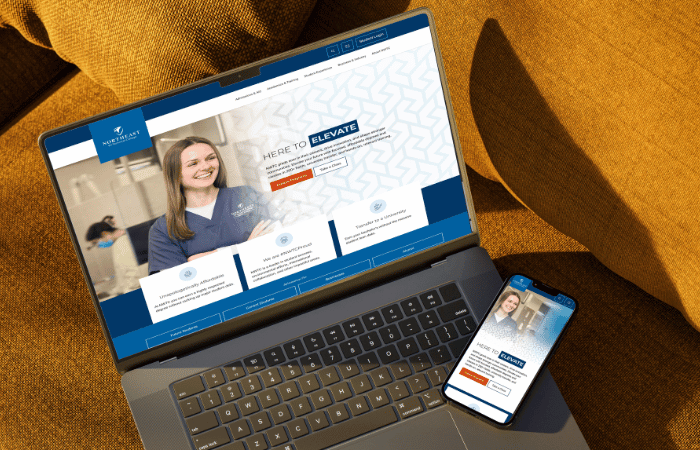
At first glance, the migration appeared straightforward: move the website from one version of Kentico to another. Early discovery quickly revealed that the project was significantly more complex.
Several challenges emerged:
The website contains approximately 7,000 pages and numerous custom components that support critical business processes and student experiences.
Not all functionality has a direct migration path. Certain features, including custom data structures and tables, require redesign rather than migration.
Multiple downstream systems rely on Kentico data and assets, creating dependencies that extend beyond the public website and require coordinated releases.
The website supports approximately 50 content editors across the college, requiring a thoughtful training and change management strategy.
As a cross-departmental web team led from Marketing & Communications, the project risked losing visibility and developer capacity to competing organizational priorities if leadership alignment and resource planning were not established early.
I serve as the project's:
I initiated and now lead the migration effort by:
Discovery work revealed several important findings.
The migration is not a simple "lift and shift." While some areas have a defined upgrade path, other components will require redesign or rebuilding to align with Xperience by Kentico's cloud architecture.
Custom tables and several integrations need to be reconsidered and potentially rearchitected rather than migrated as-is.
Several downstream systems depend on Kentico data and assets, including integrations that will require coordinated releases and additional testing to avoid disruption.
The migration also creates an opportunity to improve content flexibility and reduce technical debt by re-evaluating how certain content structures and widgets are designed.
The discovery process continues to evolve as the development environment is established and migration tooling is assessed.

Rather than immediately beginning development work, the project started with a structured discovery and planning phase focused on understanding the current ecosystem before making implementation decisions.
The work was organized into five phases:
A major focus of the project has been creating organizational visibility around developer capacity needs. Because the Web Team is cross-departmental and many of the technical resources report through IIT, one of the project's early priorities was aligning leadership around the reality that this migration requires sustained development support over many months—not episodic work that can be completed alongside competing priorities.
The phased approach also intentionally positions the college for future initiatives, including the implementation of CourseDog as the new source of program and curriculum data.
The migration strategy focuses on moving the college to a supported, cloud-hosted platform while minimizing disruption to content editors and preserving critical functionality.
The work includes:
The project is also creating greater visibility into the college's web ecosystem by documenting dependencies, ownership, and operational processes that previously existed largely as institutional knowledge.
The project is currently in the discovery and planning phase. Over the coming months, work will focus on:
The target is to complete the migration by the end of 2026, establishing a modern, cloud-based foundation for the college's future digital initiatives.

